
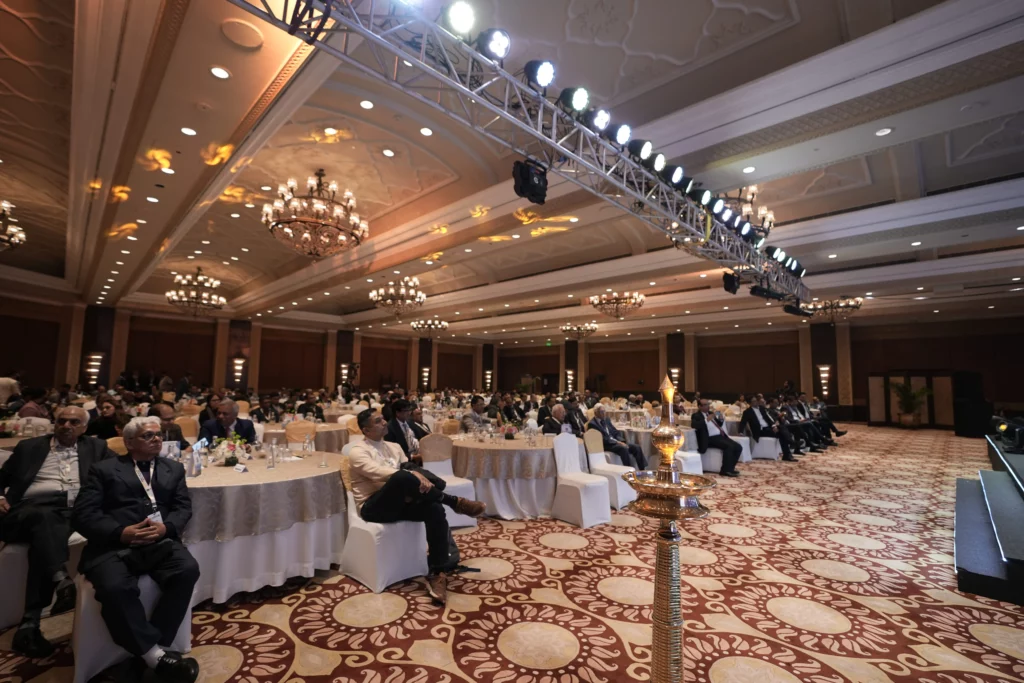
The IIT Roorkee Alumni Global Meet 2026 held on 3rd January, brought together over 500 members of the global IIT Roorkee alumni community, along with senior leaders from government and industry, innovators, and academicians in New Delhi to commemorate the Institute’s 178-year legacy and to deliberate on strategic questions shaping India’s next phase of growth in the age of artificial intelligence.
Conceived as a high-level alumni and leadership conclave, the Global Meet was structured around the theme “Reinventing in the Age of AI”, with a focused agenda examining how artificial intelligence and advanced technologies are influencing public systems, infrastructure development, energy transition, and the broader innovation ecosystem.
As the Title Partner, VisionIAS participated at the Global Meet, reaffirming its long-standing association with academic excellence and public leadership. Vision AI India, the technology and research arm of VisionIAS, supported the summit as the technical arm, contributing to the conceptual framing of AI-centric discussions with emphasis on responsible deployment, institutional readiness, and national impact.
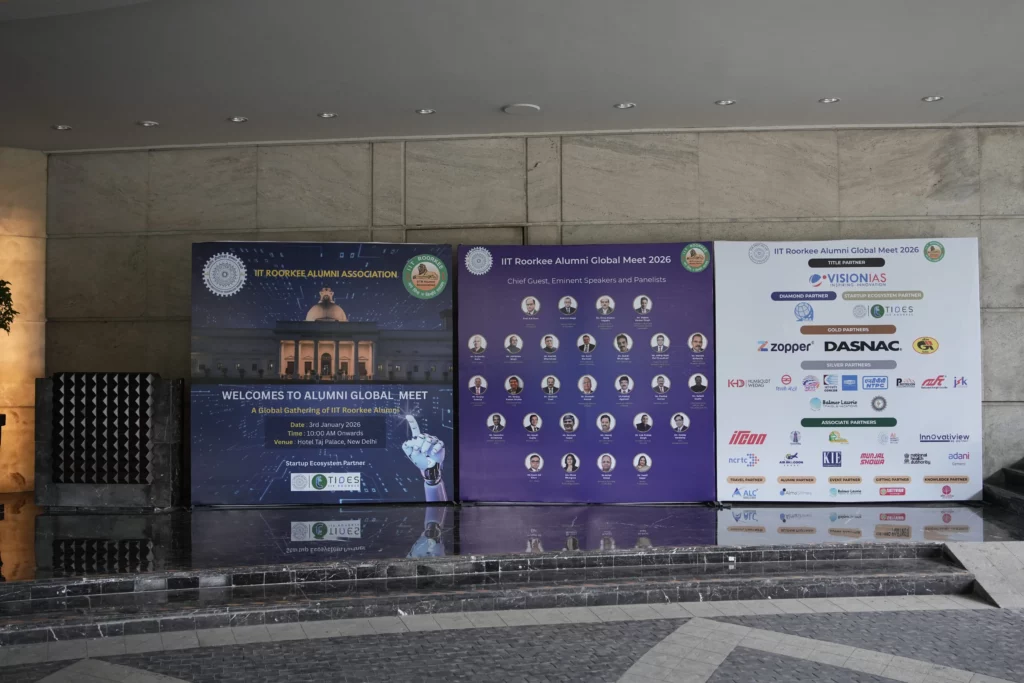
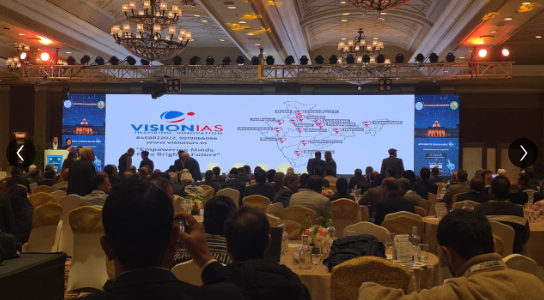
Event partner backdrop for the IIT Roorkee Alumni Global Meet 2026, featuring VisionIAS as Title Partner and participating partner organisations.
Hosted by the IIT Roorkee Alumni Association (IITRAA), the Global Meet was designed as both a celebration of institutional legacy and a forward-looking forum to connect generations of alumni and engage with contemporary challenges at the intersection of technology, governance, and nation-building.
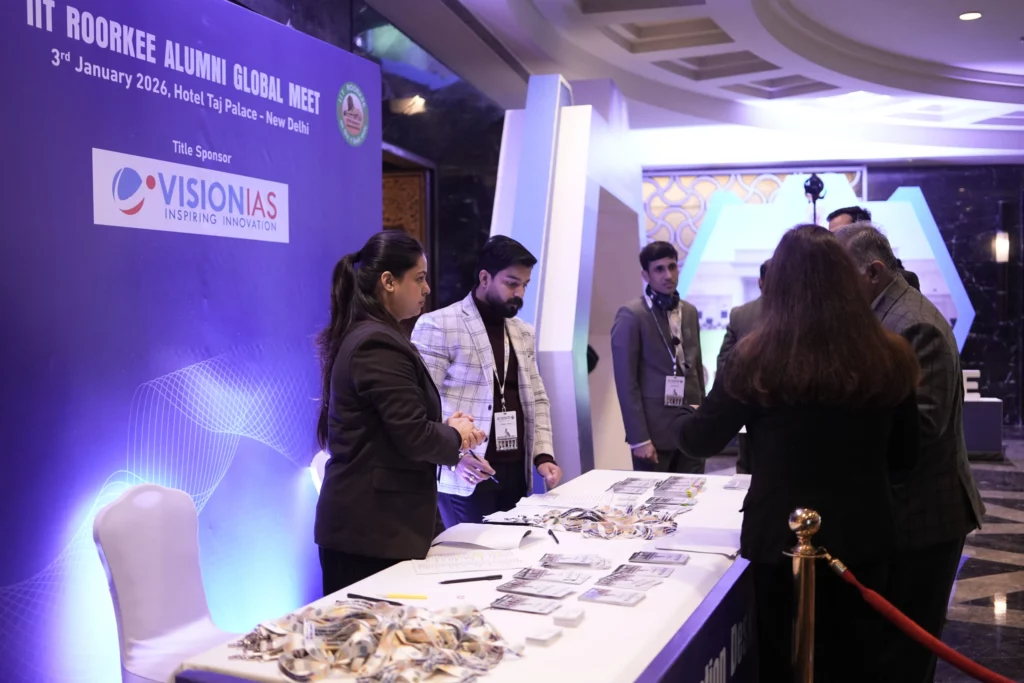
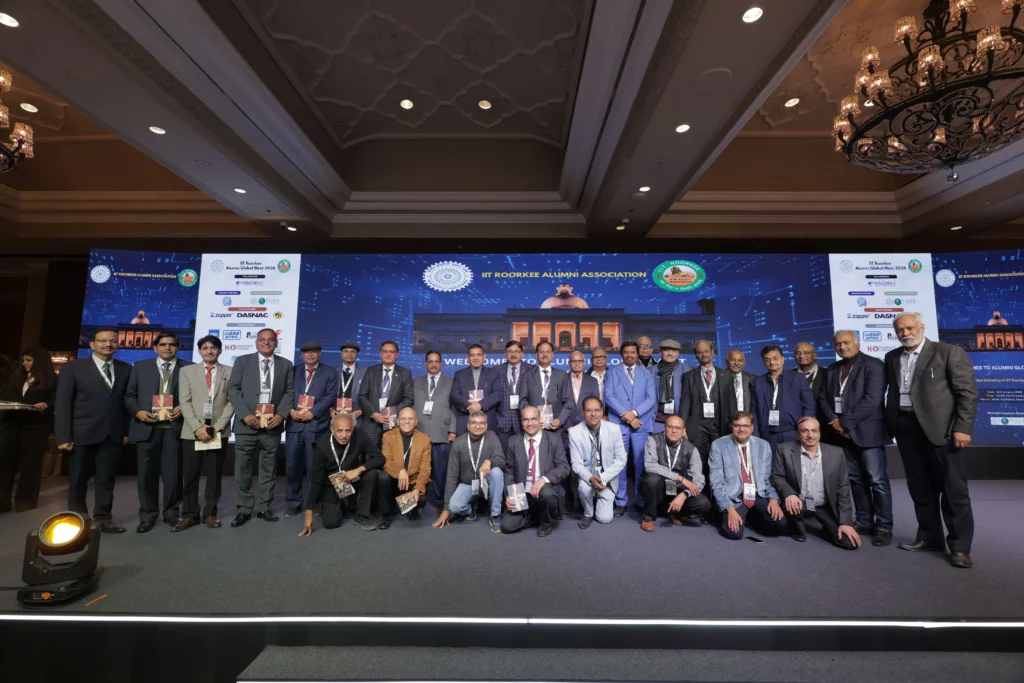
Delegates and alumni at the IIT Roorkee Alumni Global Meet 2026, held at Darbar Hall, Hotel Taj Palace, New Delhi.
Inauguration and Opening Ceremony
The formal proceedings of the Global Meet began with the inaugural session, following delegate registration and welcome interactions.
The ceremony opened with the traditional lamp-lighting, marking the official commencement of the IIT Roorkee Alumni Global Meet 2026. The lamp was lit by Prof. K. K. Pant, Director, IIT Roorkee, along with Shri Vinay Kumar Tripathi, President, IITRAA, Shri Dinesh Mohan Gupta, Vice President, IITRAA, and Shri Rajiv Kumar Singh, Honorary Secretary, IITRAA, among other distinguished guests and office-bearers of the association. The inaugural proceedings included the felicitation of distinguished alumni and guests and the opening address by the Chief Guest.
The event was formally inaugurated by, Prof. K. K. Pant, Director, IIT Roorkee, who addressed the gathering and reflected on IIT Roorkee’s enduring contribution to India’s engineering, scientific, and institutional development over nearly two centuries.
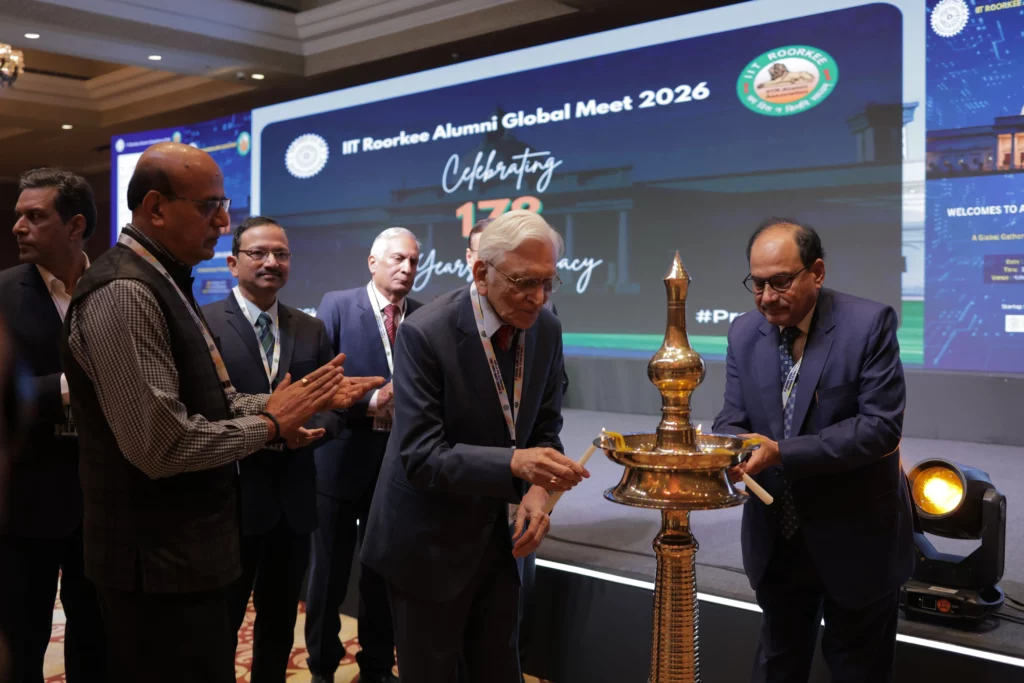
Lamp-Lighting Ceremony — Dignitaries including Chief Guest Prof. K. K. Pant, Director, IIT Roorkee inaugurates the IIT Roorkee Alumni Global Meet 2026.
The opening session set the stage for the day’s deliberations, which were organised around three thematic tracks focusing on artificial intelligence and nation-building, clean energy and net-zero transition, and infrastructure as a growth multiplier.
Session I: AI and Nation Building — Pathways to Growth and Impact
The first thematic session of the Global Meet focused on one of the most consequential questions of the present decade: how artificial intelligence can be deployed at population scale to strengthen India’s public systems, economic inclusion, and institutional capacity.
The session was moderated by Ms. Divya Bhargava and the panel brought together Shri Abhishek Singh, IAS, Additional Secretary, MeitY, CEO, IndiaAI Mission, DG, NIC; Shri Sunil Kumar, IAS, CEO, National Health Authority; Shri Sumit Bhatnagar, CEO, Freecharge, and Shri Manish Bhardwaj, IAS, Secretary, National Disaster Management Authority, representing leadership perspectives from digital public infrastructure, healthcare, industry, and disaster management.
Opening the discussion, Shri Abhishek Singh emphasised that AI systems meant for population-scale deployment must be designed around simplicity, accessibility, and real-life problem-solving, rather than technological sophistication alone. Drawing parallels with the success of platforms such as UPI and WhatsApp, he underlined that adoption at scale depends on intuitive design and frictionless user experience. He highlighted how initiatives such as Bhashini and voice-enabled AI services can help bridge India’s linguistic and digital divides—particularly for farmers, students, and first-time digital users—thereby allowing AI to exponentially enhance the reach of India’s Digital Public Infrastructure.
From the healthcare perspective, Shri Sunil Kumar presented Ayushman Bharat – PM-JAY as a landmark example of how end-to-end digital architecture can transform service delivery at scale. He explained how the scheme’s fully digital patient journey—from admission to claims settlement—has enabled it to serve over 20 crore families, while simultaneously creating one of the world’s largest anonymised health datasets. He further elaborated on how the Ayushman Bharat Digital Mission (ABDM) is building an interoperable, consent-based, federated health data ecosystem, enabling the safe testing and benchmarking of AI tools on real-world Indian data while preserving privacy by design. He also announced the development of an AI testing and benchmarking platform in collaboration with IIT Kanpur to ensure that health AI tools are clinically reliable and India-specific.
Bringing in the industry perspective, Shri Sumit Bhatnagar stressed that sustainable AI innovation requires viable business models, assured demand, and strong public–private collaboration. While acknowledging India’s global leadership in digital public platforms, he argued that clear problem statements, access to datasets, and committed public procurement are critical to attracting startups and investors to build indigenous AI solutions across sectors such as healthcare, defence, and education.
Extending the discussion to disaster resilience and climate risks, Shri Manish Bhardwaj highlighted how AI-enabled predictive forecasting, hyper-local alerts, and vulnerability mapping can dramatically improve disaster preparedness, especially in Himalayan and other high-risk regions. He outlined NDMA’s plans to develop a National Disaster Database integrating satellite, radar, sensor, and meteorological data, and to invite startups to build AI-driven digital public goods for disaster risk management.
In response to a broader question on institutional readiness for AI, the panel converged on a common diagnosis: India’s primary challenge is not the absence of data, but the absence of structured, shareable, and analytically usable data capacity. Shri Abhishek Singh detailed how the IndiaAI Mission’s “AI Kosh” platform is being designed to standardise, curate, anonymise, and securely share government datasets. Shri Sunil Kumar emphasised the parallel need to build domestic foundational models trained on Indian data, supported by new institutional capacity such as the NHA Digital Academy.
The session concluded with a clear consensus: AI is not merely a technological upgrade for India—it is a strategic instrument of nation-building, whose success will depend on institutional design, data governance, human capacity, and public trust, as much as on algorithms or computing power.
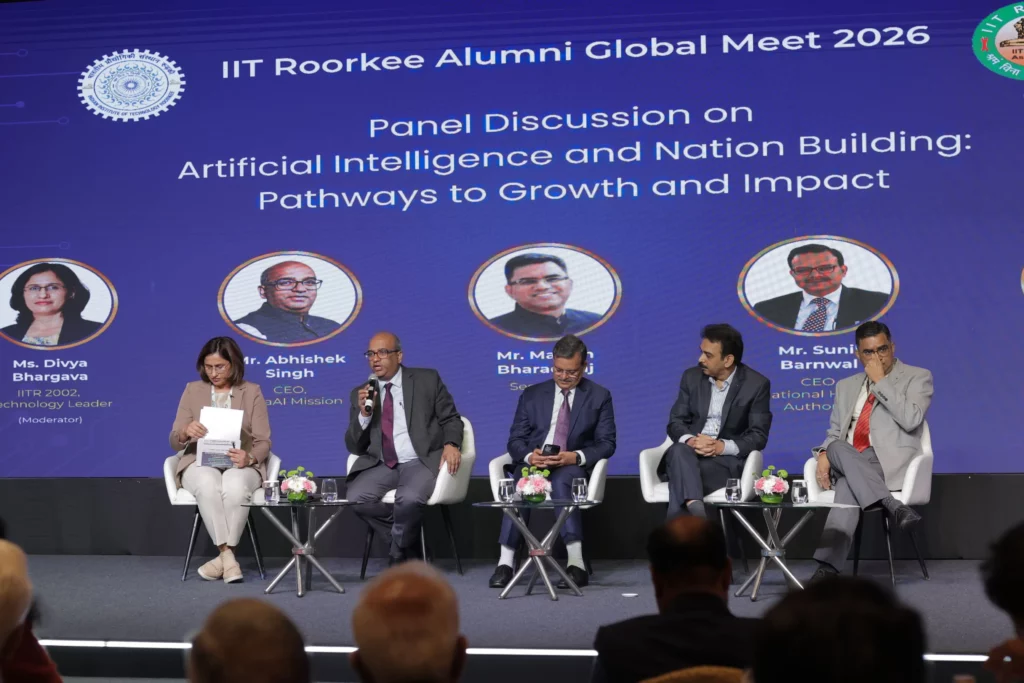
Session I — “AI and Nation Building: Pathways to Growth and Impact” in progress at the IIT Roorkee Alumni Global Meet 2026. From left to right: Ms. Divya Bhargava (Moderator), Shri Abhishek Singh (CEO, IndiaAI), Shri Sunil Kumar (CEO, NHA), Shri Sumit Bhatnagar (CEO, Freecharge), and Shri Manish Bhardwaj (Secretary, NDMA)
Session II: Energy & Innovative Net Zero Transitioning
The second thematic session of the Global Meet focused on India’s pathway to a clean, resilient, and sustainable energy system while sustaining rapid economic growth.
The session was moderated by Shri Azamali Khan, CEO, TIDES II, and the panel comprised Shri Pankaj Agrawala, IAS, Secretary, Ministry of Power, Shri Adhip Nath Palchaudhuri, Chairman & Managing Director, Balmer Lawrie, and Shri Soumitra Shrivastava, Director (Marketing), Indian Oil Corporation (IOC). Shri P. K. Singh, Director, ONGC, was unable to attend due to a prior official engagement.
Setting the context, Shri Pankaj Agrawala reaffirmed India’s commitment to achieving net zero by 2070 and highlighted the central role of energy storage in managing the variability of renewable power. He noted that India is targeting 300 GWh of battery storage capacity by 2030 and emphasised the growing importance of digital and AI-enabled systems in balancing future grids—capturing the emerging dual challenge of “AI for grids” and “grids for AI”.
From an industry perspective, Shri Adhip Nath Palchaudhuri outlined how Balmer Lawrie is pursuing decarbonisation through materials innovation, circular economy practices, and logistics optimisation, including reduced steel usage and the adoption of more efficient industrial packaging solutions.
Shri Saumitra Srivastava described Indian Oil’s roadmap towards its net-zero target of 2046, while maintaining energy security and affordability. He highlighted IOC’s investments in biofuels, sustainable aviation fuel, hydrogen, EV infrastructure, and gas as a transition fuel, and explained how AI is already embedded across IOC’s operations—from refinery digital twins and predictive maintenance to customer analytics.
The discussion also underscored the opportunity for startups and innovators, particularly in the power sector, where large-scale smart metering and grid digitisation are generating unprecedented volumes of data. The session concluded with a shared recognition that India’s energy transition is fundamentally a systems transformation, requiring close coordination between policy, industry, and technology.
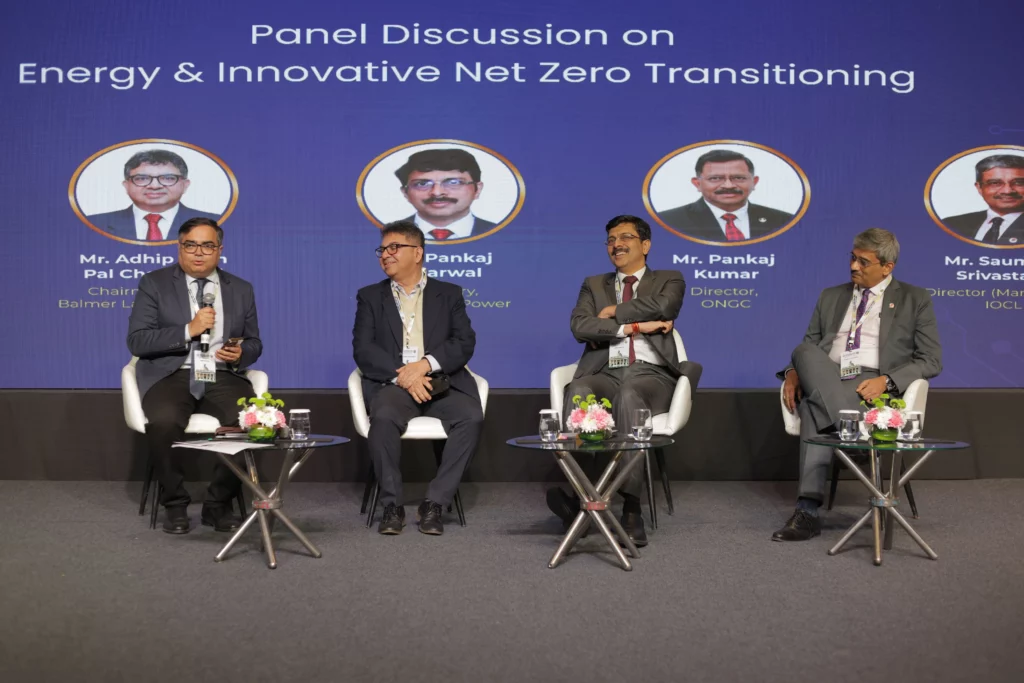
Session II — “Energy & Innovative Net Zero Transitioning” in progress at the IIT Roorkee Alumni Global Meet 2026. From left to right: Shri Azam Ali Khan, (Moderator), Shri Adhip Nath Palchaudhuri (CMD, Balmer Lawrie), Shri Pankaj Agarwal, IAS (Secretary, Ministry of Power) and Shri Saumitra Srivastava, (Director Marketing , IOCL)
Session III: Infrastructure — The Growth Multipliers
The third thematic session of the Global Meet focused on infrastructure as the backbone of India’s growth story, examining how scale, quality, sustainability, and systems reform must come together to support India’s ambition of becoming a developed nation by 2047.
The session was moderated by Dr. Achal Mittal, Emeritus Scientist, CSIR-CBRI, and the panel featured Shri Sanjay Swaroop, Chairman & Managing Director, CONCOR, Shri Shalesh Gupta, CEO, JSK Industries Pvt. Ltd., Shri Manish Khilauria, MD & CEO, Protecon BTG (P) Ltd., Shri Manoj Garg, Vice Chairman, Rail Land Development Authority (RLDA), Dr. L. P. Singh, Director General, National Council of Cement and Building Materials (NCCBM), and Shri Sanjay Varshney, CEO, Signature Global.
Setting the context, the panel noted that infrastructure investment remains one of the strongest drivers of economic growth, with every rupee spent generating a multiplier effect across sectors such as roads, railways, housing, logistics, and urban development. With large public outlays already committed, the discussion moved beyond funding to examine what truly constrains timely, high-quality infrastructure delivery.
On the central question—what is the biggest challenge: funds, systems, or sustainability—the panel offered sharply grounded perspectives. Shri Sanjay Swaroop identified land acquisition as the most critical bottleneck rather than financing. Shri Shalesh Gupta and Shri Sanjay Varshney pointed to the system itself, particularly prolonged approval cycles and the limitations of the L1 (lowest-bid) procurement model. Shri Manish Khilauria added that shortage of skilled manpower and weak project governance systems further compound delays. From a policy and long-term perspective, Shri Manoj Garg and Dr. L. P. Singh emphasised that sustainability must be the organising principle of future infrastructure, especially in sectors such as railways and cement, which are both capital-intensive and carbon-intensive.
A significant part of the discussion focused on maintaining existing infrastructure more intelligently. The panel strongly advocated a shift from reactive to proactive maintenance, using IoT, sensor-based monitoring, and AI-driven structural health systems. Suggestions included embedding Annual Maintenance Contracts (AMCs) into project design, building integrated facility management systems, ensuring continuous monitoring, and enforcing clear accountability frameworks with defined delivery timelines.
Sector-specific discussions added further depth. Dr. L. P. Singh explained how the cement sector—one of the hardest-to-abate industries—has already achieved nearly 50% decarbonisation, and outlined future pathways involving alternative raw materials, CO₂ capture, and carbonated building materials. Shri Manoj Garg shared insights into Indian Railways’ station redevelopment programme, where stations are being reimagined as multi-modal, self-sustaining city centres with integrated transport, commercial development, and modern passenger infrastructure.
The session concluded with a clear takeaway: India’s infrastructure challenge is no longer just about building more—it is about building better, building sustainably, and building with systems that ensure quality, longevity, and efficiency.
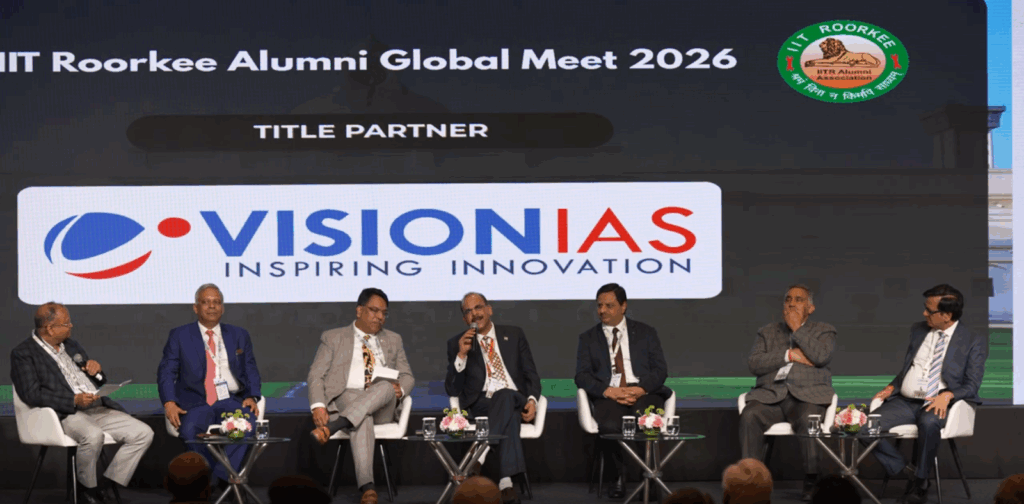
Session III — “Infrastructure — The Growth Multipliers” in progress at the IIT Roorkee Alumni Global Meet 2026. From left to right: Dr. Achal Mittal, Emeritus Scientist, CSIR-CBRI (Moderator), Shri Sanjay Swaroop (Chairman & MD, CONCOR), Shri Selesh Gupta (CEO, JSK Industries Pvt. Ltd.), Shri Manish Khilauria (MD & CEO, Protecon BTG (P) Ltd), Shri Manoj Garg (Vice Chairman, RLDA), Dr. Lok Pratap Singh (Director General, NCCBM), Shri Sanjay Varshney, (CEO, Signature Global).
Startup Pitches and Awards
Beyond the thematic sessions, the Global Meet also created a strong platform for entrepreneurship, peer learning, and alumni-led collaboration. A dedicated segment on Startup Pitches & Awards brought together innovators and founders to present ideas and venture directions in front of an engaged alumni audience, reflecting IIT Roorkee’s continuing role as a national pipeline for technology-led enterprise.
As part of the Start-up Awards, five startups were selected for cash awards, recognising high-potential ideas and encouraging early-stage builders within the alumni ecosystem
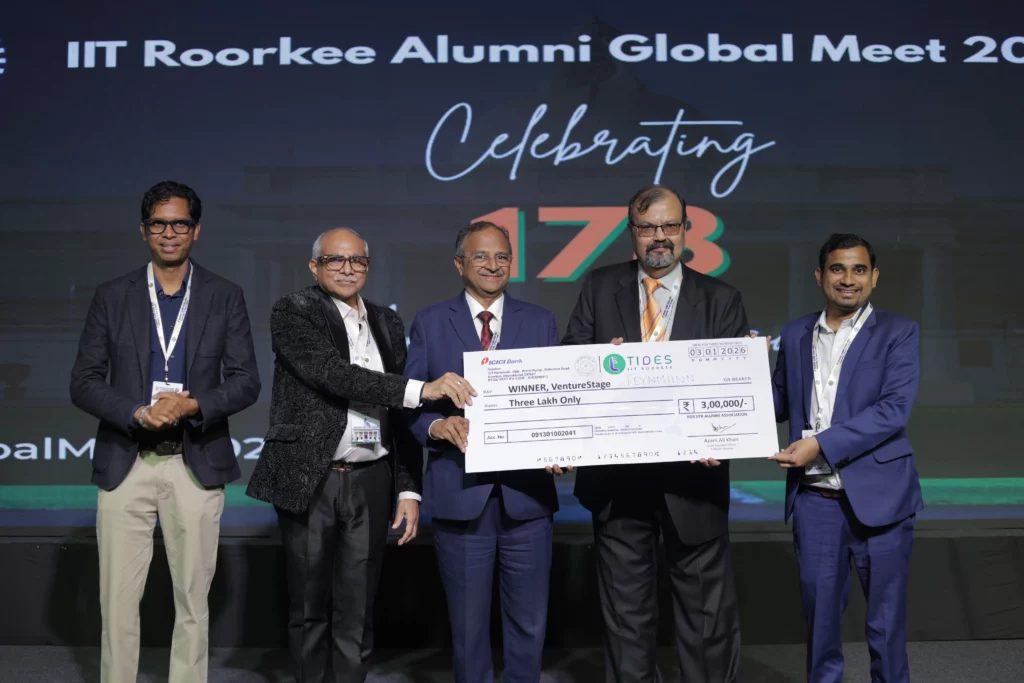
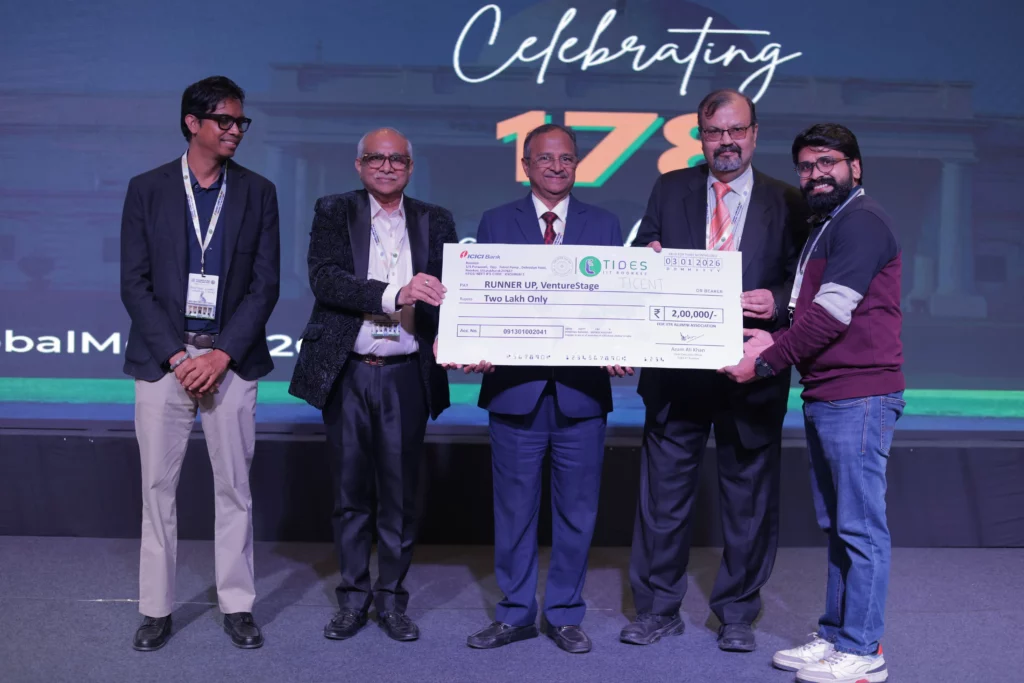
Startup Awards during the IIT Roorkee Alumni Global Meet 2026.
Alumni Networking, Reunions, and Community Engagement
Beyond structured sessions and presentations, the Global Meet also placed strong emphasis on reconnecting the alumni community across batches, geographies, and professions. Informal interactions during the Networking Lunch, tea breaks, and inter-session intervals transformed the venue into a vibrant space of conversations, reunions, and renewed professional and personal bonds.
Alumni were seen reconnecting with batchmates, introducing peers to colleagues and collaborators, and exchanging perspectives across generations—from public service and industry to entrepreneurship and academia. These moments of engagement reflected the deeper purpose of the Global Meet: not only to deliberate on India’s future, but to strengthen the human networks that will help shape it.
The networking segments also created natural bridges between alumni, policymakers, and industry leaders present at the summit, reinforcing the role of the IIT Roorkee alumni community as a living, evolving professional ecosystem rather than just an institutional legacy.
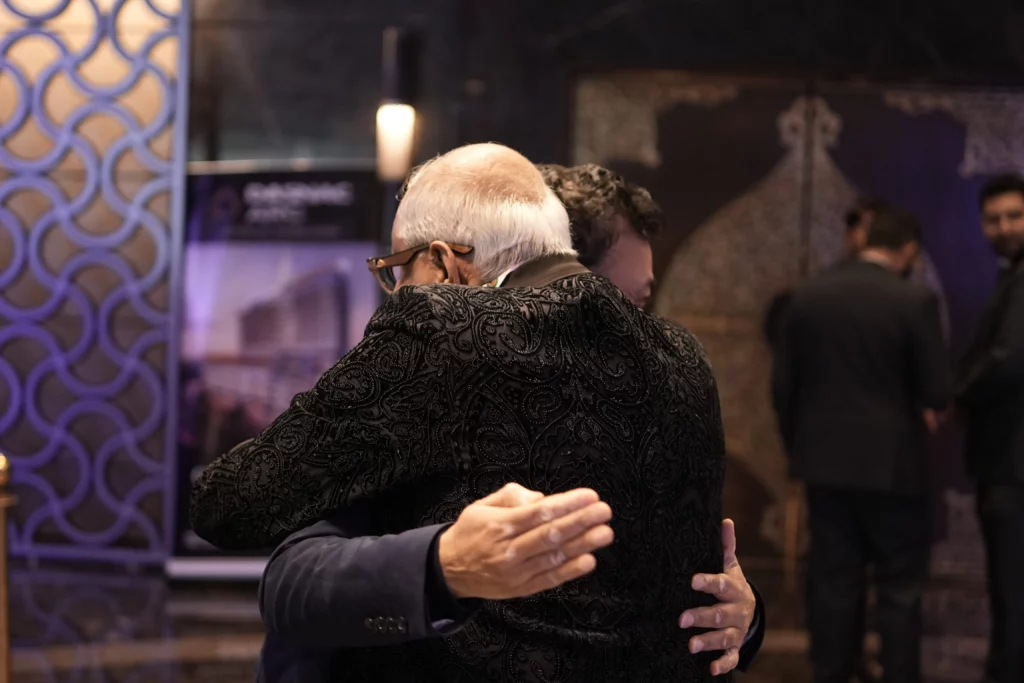
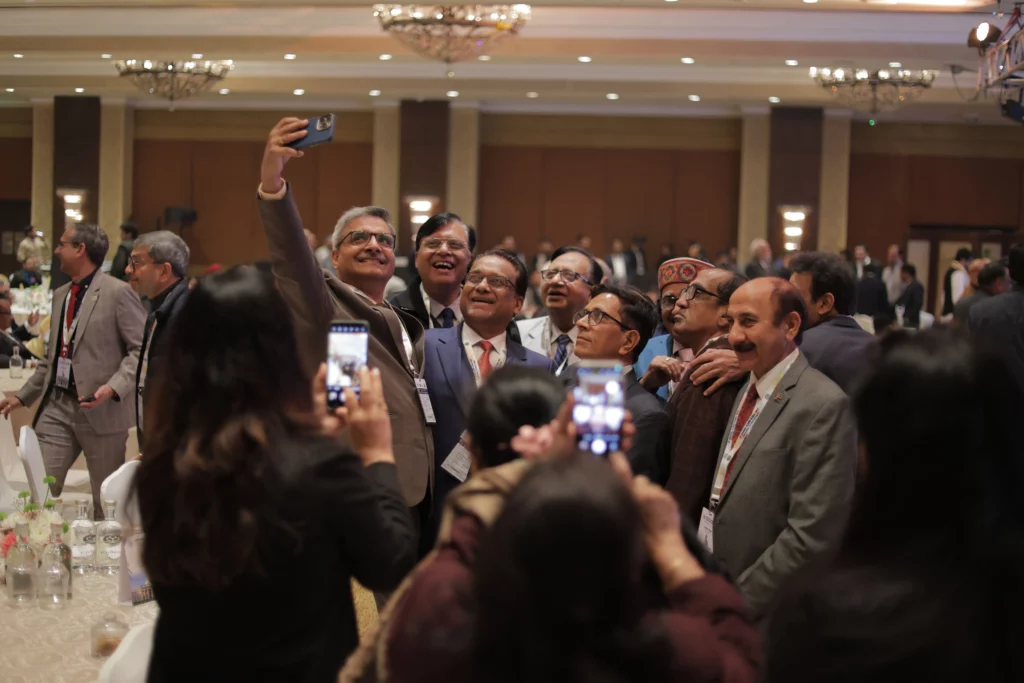
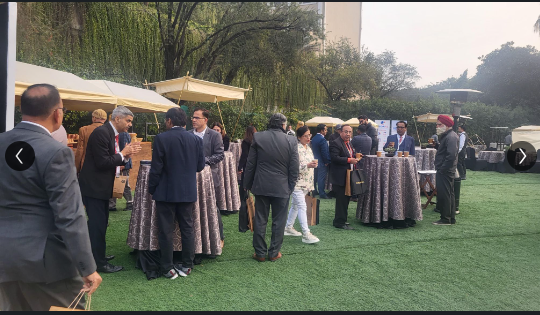
Alumni networking and interactions during the IIT Roorkee Alumni Global Meet 2026 — moments of reconnection, collaboration, and community bonding across generations.
Alumni Live & Unplugged — Creative Expressions, Poetry, and Shared Narratives
Alongside the policy and technology deliberations, the IIT Roorkee Alumni Global Meet 2026 also featured Alumni Live & Unplugged—a thoughtfully curated segment celebrating creative expression, storytelling, and the literary voices of the alumni community.
A central highlight was the Poetry & Authors’ Panel, which brought together alumni writers and poets to reflect on publishing journeys, the craft of storytelling, and the relevance of poetry in an engineer’s life. The session explored how structured, technical thinking can be translated into meaningful narratives and creative expression, offering a distinctive cultural and intellectual counterpoint to the day’s technical discussions.
The broader Live & Unplugged segment also included open-stage poetry and storytelling, batch-wise introductions, and shared personal reflections, turning the venue into a space of collective memory and expression. These moments reinforced the emotional continuity of the IIT Roorkee alumni community—across generations, disciplines, and geographies—and added a human dimension to the summit’s larger discourse on technology and nation-building.
Together, these sessions demonstrated that the alumni community is not only shaping institutions and enterprises, but also contributing to culture, literature, and public discourse with equal depth and commitment.
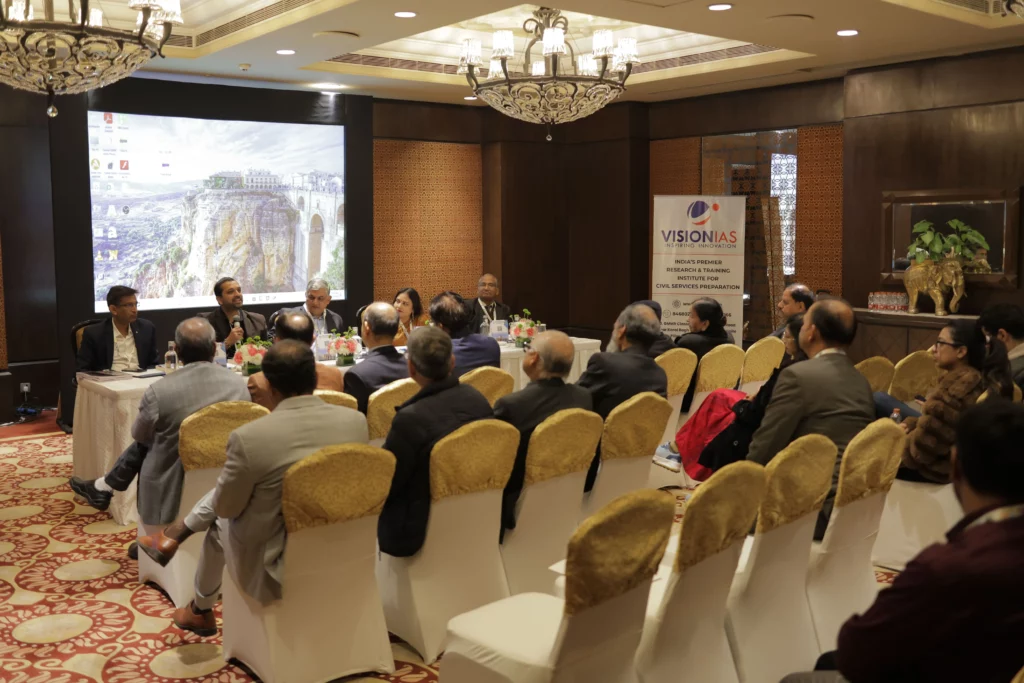
Poetry & Authors’ Panel at the IIT Roorkee Alumni Global Meet 2026.
Conclusion
For nearly two centuries, IIT Roorkee has stood for a tradition of public purpose, scientific temper, and institutional leadership—the Thomasonian spirit that connects engineering excellence with nation-building responsibility. The Alumni Global Meet 2026 reaffirmed that this spirit remains not only alive, but deeply relevant in an age of artificial intelligence, energy transition, and large-scale infrastructure transformation.
As VisionIAS, the Title Partner, and VisionAI India, its technology and research arm, continue to work at the intersection of education, governance, and applied AI, the conversations and collaborations emerging from this gathering underscore a shared commitment: that technological progress in India must remain anchored in trust, institutional integrity, and public value.
The Global Meet was not merely a reflection on the future—it was an assertion that legacy institutions, when guided by purpose and community, can continue to shape national trajectories with clarity, responsibility, and confidence.