
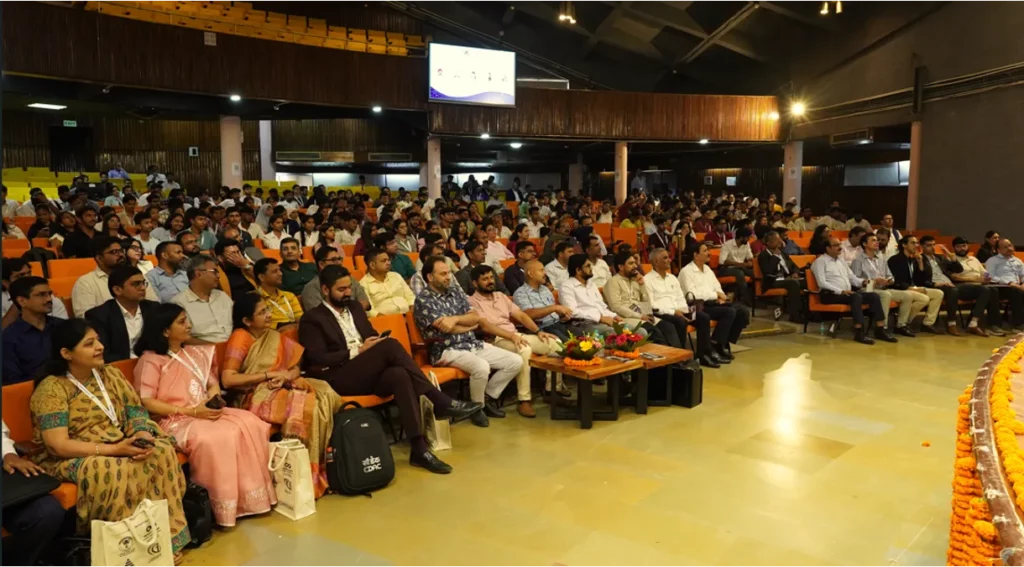
Held at Dogra Hall, IIT Delhi | Organised by Vision AI India
Introduction
India stands at the threshold of a new digital era—one defined by the convergence of Artificial Intelligence, Quantum Computing, Blockchain, and Cybersecurity. To navigate this transformation responsibly, Vision AI India, a technology subsidiary of VisionIAS, hosted the Emerging Tech Conference 2025 on October 5 at IIT Delhi.
The conference brought together leading voices from government, academia, and industry to explore how emerging technologies can be harnessed to build an inclusive, ethical, and sustainable digital future for the nation.
Lighting the Path to an Intelligent and Ethical Future
The day commenced with the traditional Deep Prajwalan (Lamp Lighting) ceremony, a symbolic act representing the triumph of knowledge over darkness. Among the dignitaries who graced the inaugural moment were Er. Ajay Kumar Singh (Founder-Director, Vision AI India & VisionIAS), Er. Kamendra Kumar (Honorary Advisor, Vision AI India), Prof. (Dr.) Haribabu Srivastava (Ex-DG, DRDO and Professor of Practice, IIT Delhi), Er. Anand Khare (ITS & Advisor – Operations, Department of Telecommunications), Er. Arun Kumar Mishra (Director, SLDC), and Dr. Arti Noor (Dean & HoD ECE, JIIT Noida).
Several distinguished personalities continue to be associated with the conference, contributing to its global stature and intellectual depth. The esteemed participants include Dr. Ajay Shankar Singh (ICAS Camp, Europe), Mr. Sudhanshu Mehta (Chairman, Josler Group, Gujarat), Mr. Edwin (Uganda), Er. Girish Sthapak (Indian Consulate, Melbourne, Australia), Mr. Ehud Weisman (Hong Kong), Ms. Shraddha Shetty (United Kingdom), Mr. Zaki (Congo), Mr. Mohamed Fairoz (General Manager, Nawami Group, Kingdom of Saudi Arabia), Er. Anand Gupta (Director, Broadband India Forum), Dr. Chandrashekhar (Executive Director, EdCIL), Dr. Pawan Sharma (Chief General Manager, EdCIL, Camp Chile), Er. Anupam Mishra (Director, FACT, Kochi, Kerala), and Mr. Mir (Tanzania). Their continued engagement underscores the conference’s growing international reach and its role as a platform for cross-cultural collaboration and exchange of ideas.
The ceremony reflected the spirit of the event—a collective commitment to illuminate the path of innovation with integrity and collaboration. It is rightly said, “Lighting the lamp is not merely a ritual; it is a call to enlighten minds, spark collaboration, and ignite innovation.”
The serene yet vibrant ambiance of Dogra Hall at IIT Delhi set a fitting tone for the deliberations to follow—an environment where intellect, technology, and vision converged to shape the discourse on India’s technological future.
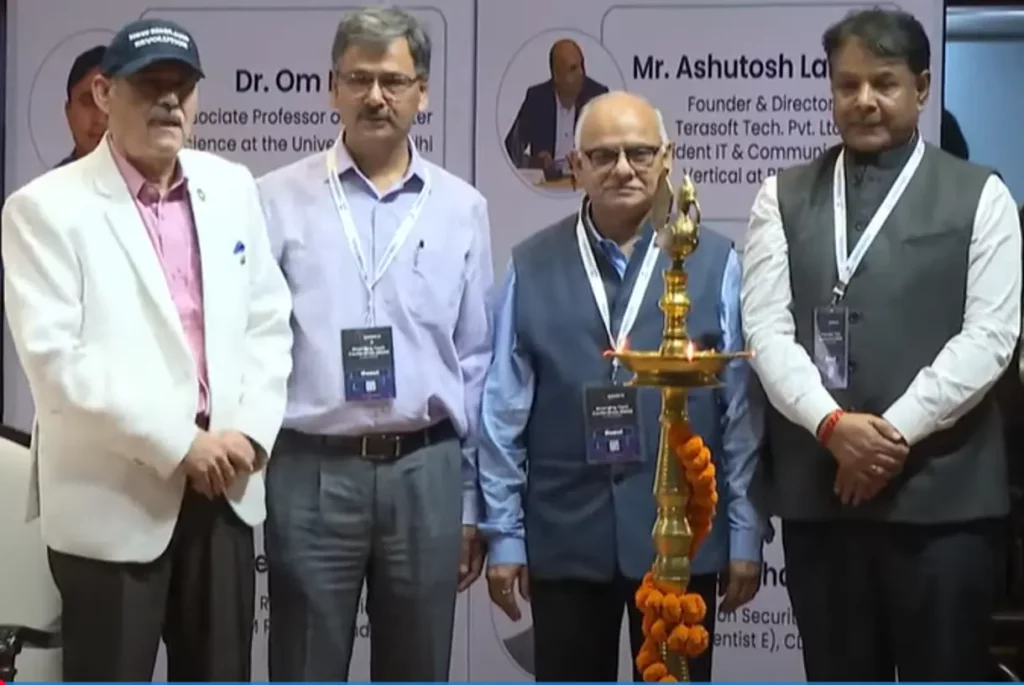
(Lamp-Lighting Ceremony — Dignitaries inaugurate the Emerging Tech Conference 2025. From left: Er. Kamendra Kumar, Er. Arun Kumar Mishra, Prof. (Dr.) Haribabu Srivastava, Er. Anand Khare.)
Vision Behind the Conference
The Emerging Tech Conference 2025 was anchored in the belief that technology achieves its highest purpose when it serves people and the planet. At the heart of this vision lies the approach championed by Shri Ajay Kumar Singh, Founder and Director of Vision AI India and VisionIAS, an alumnus of IIT Roorkee and a technologist known for integrating innovation with ethical responsibility.
This vision underscores that emerging technologies such as Artificial Intelligence, Quantum Computing, Blockchain, and Cybersecurity must be developed and deployed in alignment with societal needs, ensuring transparency, trust, and inclusivity. Rather than focusing solely on technological advancement, Vision AI India emphasizes human-centric intelligence—an ecosystem where AI, data, and values coexist to strengthen governance, education, and enterprise.
Under Shri Singh’s leadership, Vision AI India has continually bridged research, technology, and social responsibility, reflecting a commitment to inclusive growth. Initiatives such as the Rajni Devi Global Village School and PARAS India exemplify this approach, enabling access to quality education, digital empowerment, and rural innovation. The organisation also draws inspiration from Antarbodh, its initiative dedicated to student well-being and holistic personality development—ensuring that technological progress remains deeply human-oriented and ethically grounded.
This foundational vision shaped the very essence of the conference — to view emerging technologies not merely as tools of economic acceleration, but as instruments of inclusive growth, ethical progress, and national transformation.
Inaugural Address: Mentorship, Innovation and Youth
In the Keynote Address, Er. Kamendra Kumar, Honorary Advisor to Vision AI India and a veteran of the telecom sector, stressed the importance of youth participation and capacity building.
“Where AI converges with Quantum, Blockchain, and Cybersecurity, India stands at the frontier of limitless opportunity,” he remarked.
He called for stronger industry–academia collaboration and structured mentorship to equip students and start-ups with the skills needed to lead India’s digital renaissance.
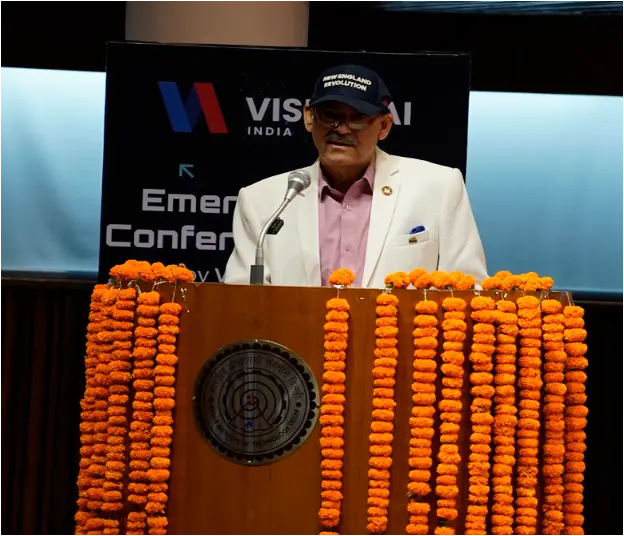
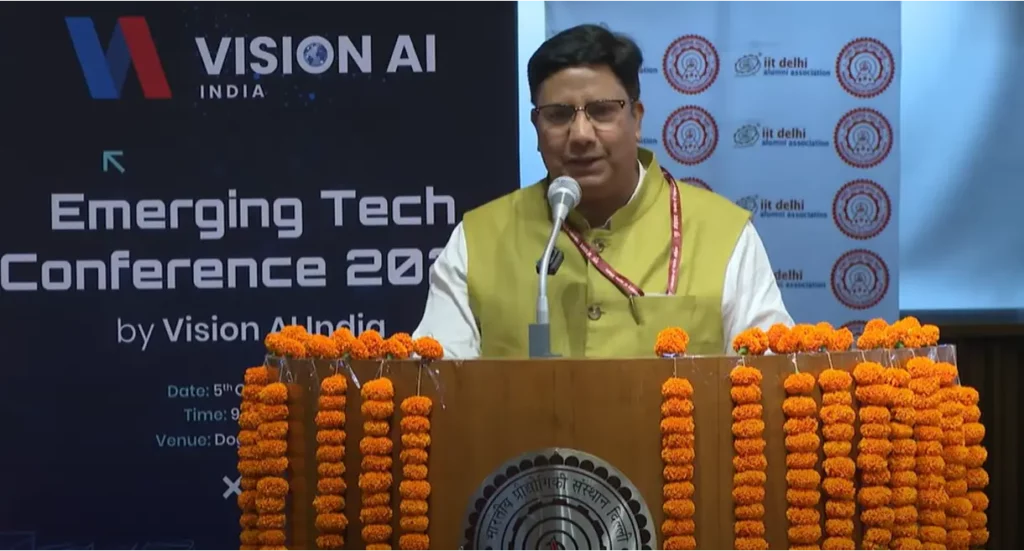
Keynote Address— Er. Kamendra Kumar addressing the audience @ Vision AI India | Emerging Tech Conference 2025 at IIT Delhi
His keynote set the tone for the day’s deliberations, emphasizing that emerging technologies must be paired with human capacity, mentorship, and collaboration to unlock their true potential. Building on this vision, the technical sessions that followed explored how AI, Quantum, Cybersecurity, and Blockchain are shaping India’s digital future across sectors.
Session I – AI Adoption in Business: Benefits and Risks
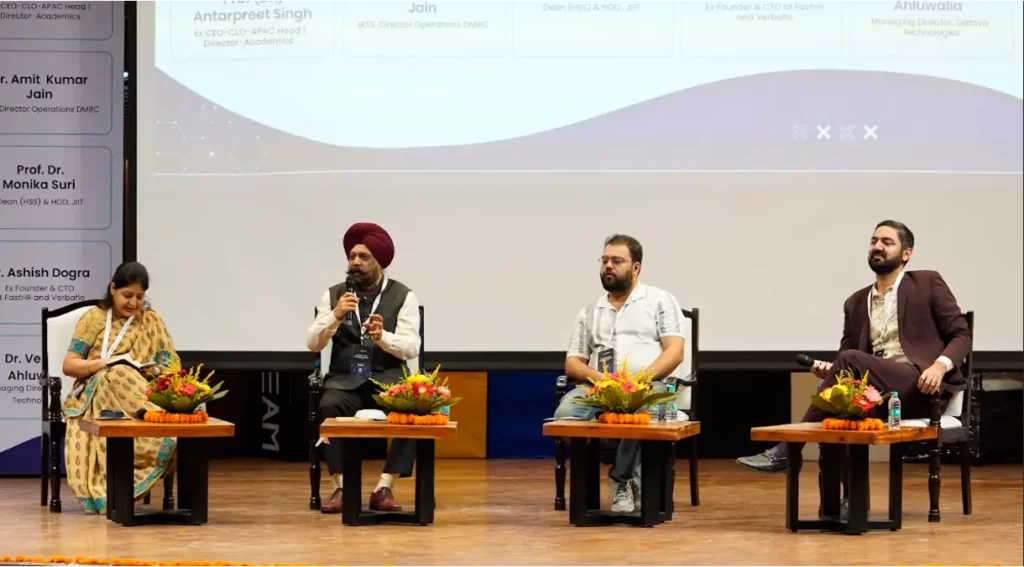
The first session of the conference set the tone for the day by examining how Artificial Intelligence is transforming decision-making and productivity across sectors, while simultaneously raising complex ethical questions around bias, privacy, and accountability.
Panelists Prof. (Dr.) Antarpreet Singh (Ex CEO–CLO–APAC Head, Director–Academics), Prof. (Dr.) Monika Suri (Dean, HSS & HoD, JIIT), Mr. Ashish Dogra (Ex Founder & CTO, FastHr and Verbaflo), and Dr. Vedant Ahluwalia (Managing Director, Dataviv Technologies) explored AI’s role in data-driven governance and intelligent automation—from optimizing public service delivery to enhancing customer experience in enterprises.
The discussion underscored that India’s AI revolution must be grounded in the values of transparency, trust, and explainability. The speakers highlighted the need for well-defined governance and regulatory frameworks to balance innovation with ethical compliance, ensuring AI serves as a tool for empowerment rather than exclusion.
Session II – Quantum Computing: Opportunities, Challenges and Threats
The second session of the conference delved into one of the most transformative frontiers in modern science — Quantum Computing. This technology, capable of exponentially increasing computational power, holds the promise of redefining secure communication, drug discovery, and advanced cryptography.
The discussion was moderated by Er. Samnvay Sharma (Quantum Computing Researcher) and featured a distinguished panel comprising Prof. (Dr.) M. Salim Beg (Telecom Expert; Former Dean, Faculty of Engineering & Prof. Tech; Professor, DGE AMU), Er. Abhishek Tiwari (Associate Director & Scientist ‘F’, CDAC Noida), and Dr. Om Pal (Associate Professor, Computer Science, University of Delhi). Together, they unpacked the scientific breakthroughs and strategic opportunities that quantum technologies bring, particularly in the Indian context.
Speakers highlighted the significance of India’s National Quantum Mission, emphasizing the urgency of building indigenous capabilities to remain globally competitive. They also underscored that 2025 being observed as the International Year of Quantum Science and Technology offers a crucial momentum for nations to invest in research, collaboration, and infrastructure in this emerging field.
While quantum systems promise unparalleled computational power, the panel cautioned that they also introduce new security threats that could render classical encryption methods obsolete — making proactive research, policy foresight, and cybersecurity readiness essential to India’s digital future.
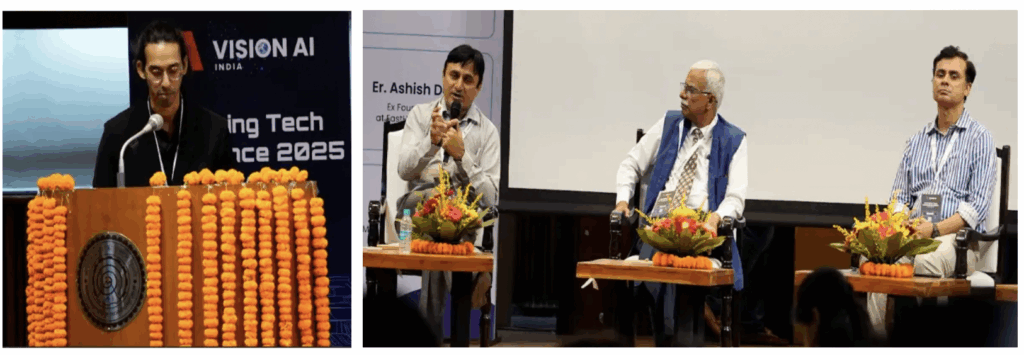
Session II Panel — Quantum Computing Experts and Participants. From left: Er. Samnvay Sharma, Dr. Om Pal, Prof. (Dr.) M. Salim Beg and Er. Abhishek Tiwari @ Vision AI India | Emerging Tech Conference 2025 at IIT Delhi
Session III – Cyber Threat Intelligence in BFSI and Corporate Security
As cyberattacks grow increasingly sophisticated, cyber resilience has emerged as a critical pillar for safeguarding financial and corporate ecosystems. This session on Cyber Threat Intelligence examined how organizations can strengthen their defenses through proactive detection, rapid response, and coordinated governance strategies.
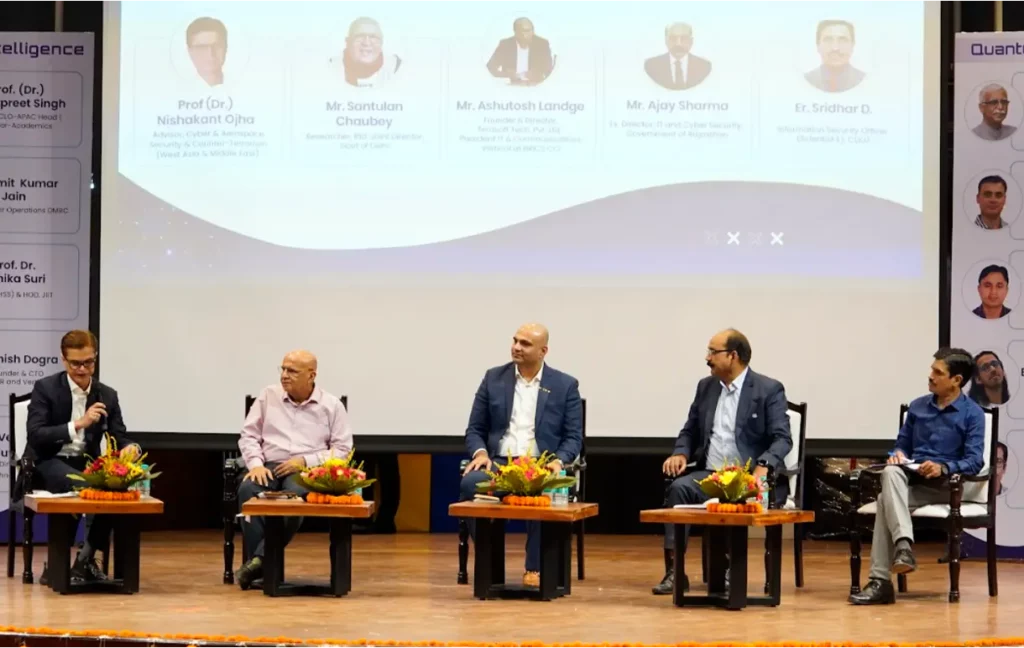
The panel was moderated by Prof. (Dr.) Nishakant Ojha (Advisor, Cyber & Aerospace Security & Counter-Terrorism, West Asia & Middle East), and featured Mr. Santulan Chaubey (Researcher, R&I; Joint Director, Government of Delhi), Mr. Ashutosh Landge (Founder & Director, Terasoft Tech Pvt. Ltd.; President, IT & Communications Vertical, BRICS CCI), Mr. Ajay Sharma (Ex Director, IT and Cyber Security, Government of Rajasthan), and Mr. Sridhar D. (Information Security Officer, Scientist E, C-DOT).
Drawing from real-world case studies, the experts discussed threat detection, vulnerability management, and incident response frameworks, highlighting the operational challenges faced by both private and public sector institutions. The conversation emphasized that cybersecurity is no longer just a technical concern, but a strategic governance imperative requiring policy integration, cross-sector collaboration, and sustained awareness-building across organizational layers.
Session IV – Blockchain Beyond Cryptocurrency
The concluding technical session of the conference explored how Blockchain technology is moving far beyond its origins in cryptocurrency to play a transformative role in governance, supply chains, education, and other critical sectors. The conversation highlighted how distributed ledger technology can enhance trust, traceability, and efficiency in public administration and enterprise systems.
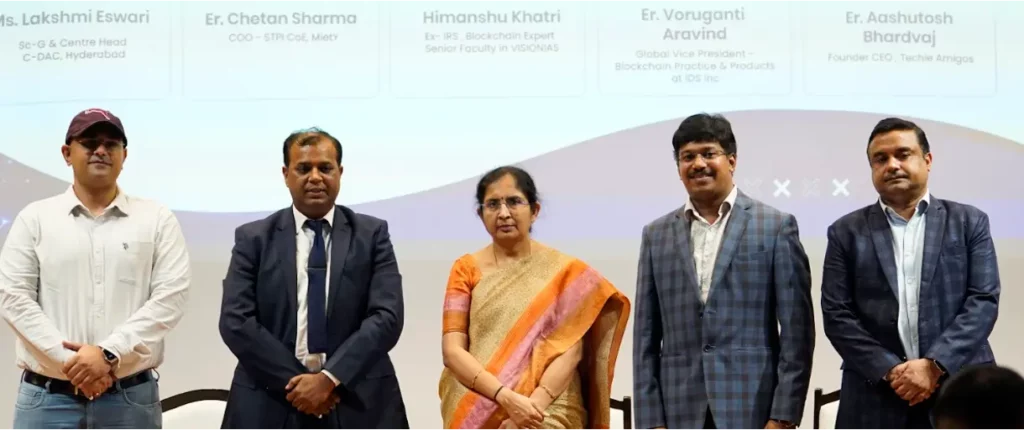
The panel was moderated by Er. Himanshu Khatri (Faculty Member, VisionIAS | Ex-IRS) and featured Er. Amit Chandra (VP – Blockchain Strategy & Delivery, IDC Inc.), Er. Chetan Sharma (COO, STPI CoE, MeitY), Dr. P. R. Lakshmi Eswari (Scientist-G & Centre Head, C-DAC Hyderabad), and Er. Voruganti Aravinda Rao (Global Vice President – Blockchain Practice & Products, IDS Inc).
Drawing from concrete use cases, the speakers discussed applications such as digital certification systems, land records management, and secure public procurement, emphasizing how blockchain can embed transparency and accountability into the very architecture of governance. The panel collectively underscored that technology, when deployed responsibly, can strengthen institutional trust and drive inclusive growth.
Inspiring Short Talks: Bridging Technology, Leadership & Innovation
The academic segment of the Emerging Tech Conference 2025 was further elevated by short in-person talks from distinguished speakers who brought strategic and applied perspectives to the emerging tech discourse.
Session on AI & VLSI – Dr. Arti Noor
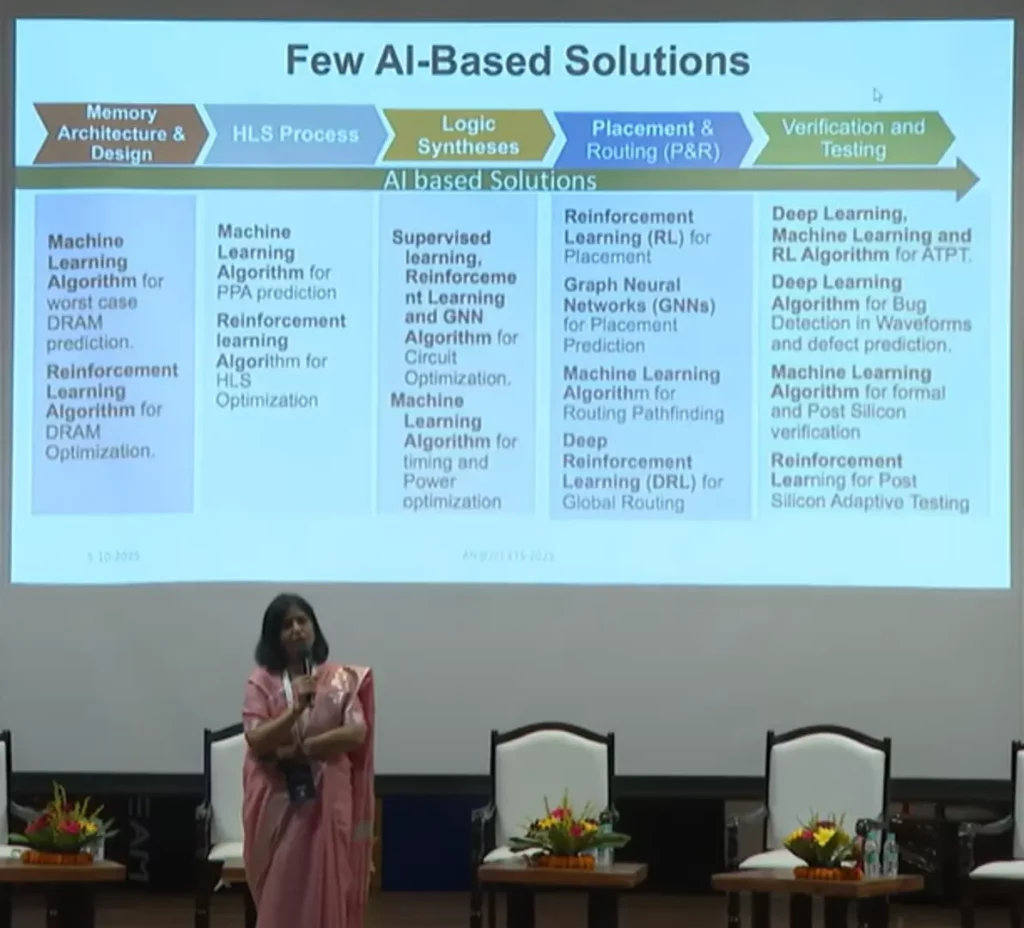
Dr. Arti Noor, Dean & HoD, ECE, JIIT Noida, delivered a focused talk on the convergence of AI and VLSI design. She highlighted how increasing chip complexity—with billions of transistors and rapidly advancing fabrication technologies—demands AI-driven solutions across every stage of the design cycle.
Drawing on real-world industry examples, Dr. Noor explained how AI/ML is revolutionizing Electronic Design Automation (EDA)—enabling automated placement, routing, optimization, and verification. She illustrated how reinforcement learning, GNNs, and generative AI are shortening design cycles, reducing power-performance trade-offs, and enhancing chip reliability.
Her talk emphasized that the fusion of AI with VLSI will be a key enabler of next-generation computing—allowing India to build complex, efficient hardware systems faster and more reliably, and positioning itself strategically in the global semiconductor ecosystem.
Adopting Emerging Tech with Purpose – Er. Prabhat Kumar Sir
Er. Prabhat Kumar, IRS, Principal Commissioner (Mumbai), Chairman – Pan IIT Alumni India, delivered an inspiring talk on the strategic adoption of emerging technologies. He underscored that India’s technological future depends not merely on developing new tools, but on creating an environment where efficiency increases and entropy decreases—a principle that applies across governance, industry, and academia.
Drawing from his experience in public administration and innovation leadership, Er. Kumar highlighted how emerging technologies must be embedded in institutional strategy, not just as enablers but as drivers of transformation. He emphasized the importance of fostering a culture of experimentation, scaling impactful use cases, and ensuring ethical deployment that aligns with national priorities.
His talk served as a call to action for leaders, technologists, and policymakers to adopt emerging technologies with purpose, clarity, and vision—ensuring that innovation translates into measurable national outcomes.
Thought Leadership and Expert Perspectives
The Emerging Tech Conference 2025 was further enriched by the presence of distinguished global thought leaders and domain experts, who joined the event virtually to share their insights on leadership, innovation, and technological preparedness. Among the speakers were Prof. Ruchin Kansal (Founder, Elite Global Leadership Institute; Professor of Practice, Seton Hall University; Visiting Professor of Practice, Brown University) and Prof. Sanjiv Pathak (University of Massachusetts, Dartmouth).
Shaping Tomorrow: How to Predict and Prepare for Emerging Technology by Prof. Ruchin Kansal
He delivered an inspiring talk on redefining leadership for the AI era. He introduced the Three Lenses of Prediction — Extension, Societal, and Convergence — as powerful tools to anticipate technological change and understand how innovation evolves at the intersection of disciplines.
Building on this, he presented a structured framework for predicting and preparing for emerging technologies, emphasizing core and catalyst competencies such as curiosity, adaptability, digital literacy, and emotional intelligence.
Prof. Kansal underscored that future-ready leadership demands a shift from hierarchical control to purpose-driven and collaborative engagement, enabling individuals and organizations to lead with foresight and resilience in a rapidly transforming digital landscape.
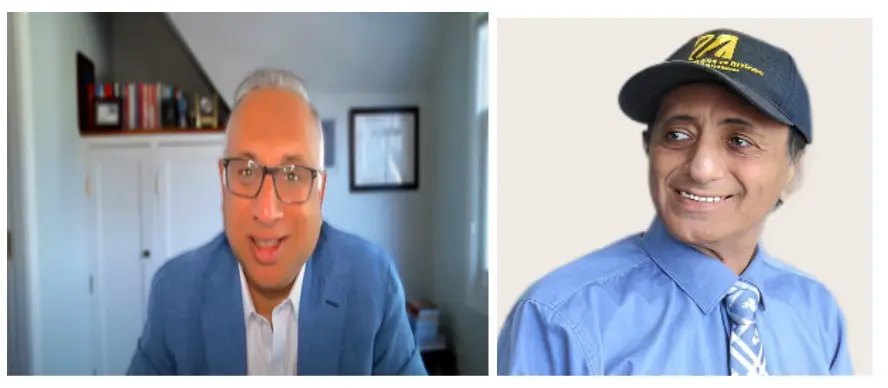
Modern AI for Corporate Success by Prof. Sanjiv Pathak
Prof. Sanjiv Pathak offered a strategic perspective on how modern AI is reshaping corporate ecosystems. Framing his talk around practical applications of AI and ML, he explained how data-driven algorithms are transforming decision-making processes across finance, healthcare, retail, and mission-critical sectors, enabling real-time insights, predictive intelligence, and operational agility.
He emphasized the importance of understanding AI fundamentals — from machine learning models and explainability to enterprise integration — and outlined how these technologies are powering front-office innovations such as personalized customer experiences, as well as back-office efficiencies including fraud detection, regulatory compliance, and automated decision systems.
Prof. Pathak also underscored that organizational readiness, leadership agility, and digital literacy are as critical as technological capability. Without these, enterprises risk falling behind in an era where modern AI is not just an enabler but a core driver of business strategy and value creation.
Quantum Deciphering by Dhiraj Madan

In his presentation “Intro to Quantum through CHSH Games”, Dhiraj Madan provides a lucid entry point into the complex world of quantum mechanics and quantum computing. He begins by contrasting the deterministic nature of the classical world, where complete information about systems is theoretically possible, with the probabilistic and uncertain foundations of quantum theory.
The discussion then moves to the limitations of classical computers in simulating quantum phenomena, highlighting the exponential resources required for such simulations, which led to the birth of quantum computing. Through the concept of CHSH games, Madan introduces quantum entanglement—an extraordinary feature of quantum systems where particles remain interconnected regardless of distance. He explains that quantum players leveraging entanglement can outperform classical strategies, a fact confirmed experimentally through Bell tests. The presentation effectively underscores how quantum mechanics defies local hidden variable theories, revealing the non-classical correlations at the heart of reality.
Emerging Tech Hackathon – Innovation in Action
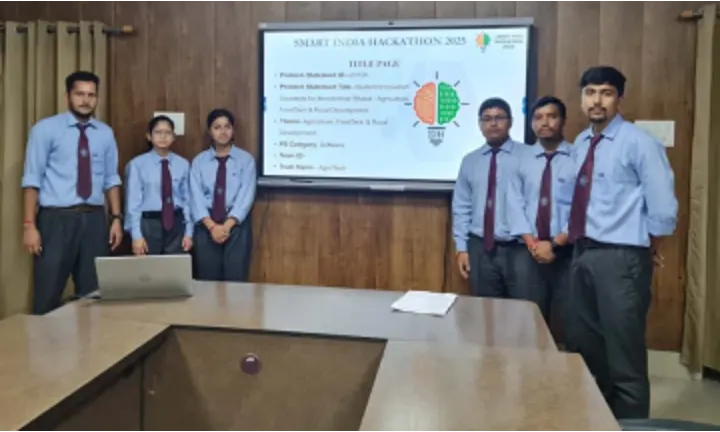
A key highlight of the day was the Emerging Tech Hackathon, where young innovators showcased AI-driven prototypes designed to solve real-world challenges in governance, sustainability, and enterprise transformation.
The hackathon reflected Vision AI India’s commitment to experiential learning, student innovation, and industry–academia collaboration.
Top Teams & Innovations:
- 1st Place – “Mitti Mitra” (AgroTech): An AI-powered virtual soil testing and smart farming solution providing accurate soil health insights, crop recommendations, and farmer-market linkages for sustainable agriculture.
- 2nd Place – “AgriAgent” (Lakshita Team): A multimodal AI-powered agricultural advisor supporting farmers with crop disease detection, weather-based recommendations, and market intelligence.
- 3rd Place – “Tera Vision”: An AI-based plant disease detection platform leveraging machine learning, deep learning, and IoT to enhance agricultural resilience.
These ideas symbolized the next wave of India’s digital transformation—driven by youthful curiosity, ethical ambition, and technological agility.
The Larger Vision: Technology with Integrity
The conference culminated with a powerful message — that India’s leadership in emerging technologies depends not just on infrastructure or investment but on ethical innovation, human values, and inclusive policy.
Through initiatives like the Emerging Tech Conference and Hackathon, the Vision AI India continues to foster dialogue on AI governance, responsible digital transformation, and future-ready skills
About Vision AI India
Vision AI India is an innovation-driven tech subsidiary of VisionIAS, committed to accelerating India’s readiness for an AI-enabled future.
Building on VisionIAS’s legacy of research and education, it partners with governments, universities, and enterprises to develop AI-powered solutions for governance, education, and skill development.
As part of this mission, Vision AI India looks forward to fostering collaborations on projects and capacity-building initiatives in emerging technologies, with a strong focus on empowering youth and supporting startups through mentorship, hands-on guidance, and innovation-led learning. These efforts aim to build an ecosystem where young professionals and entrepreneurs can harness the potential of AI and related technologies to address real-world challenges.
The Emerging Tech Conference 2025 reaffirmed a shared belief — that India’s technological progress must be guided by intelligence with integrity, innovation with responsibility, and progress with purpose.